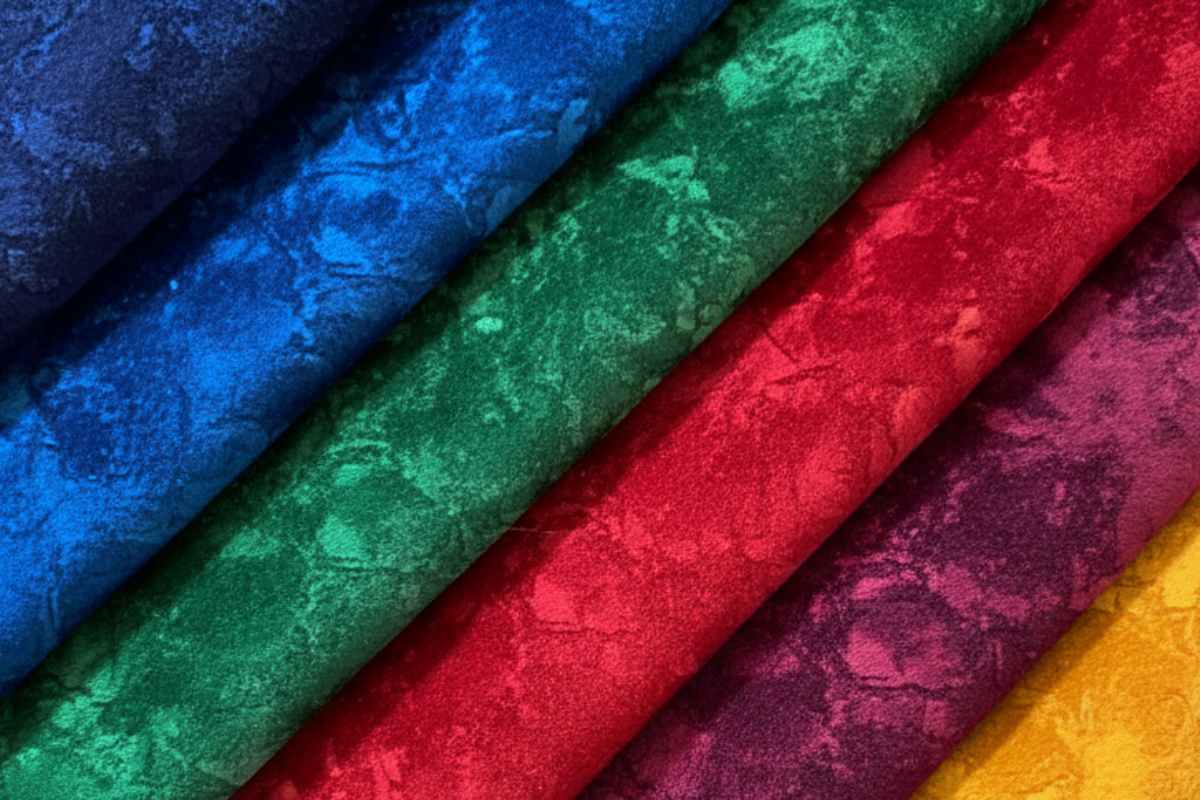
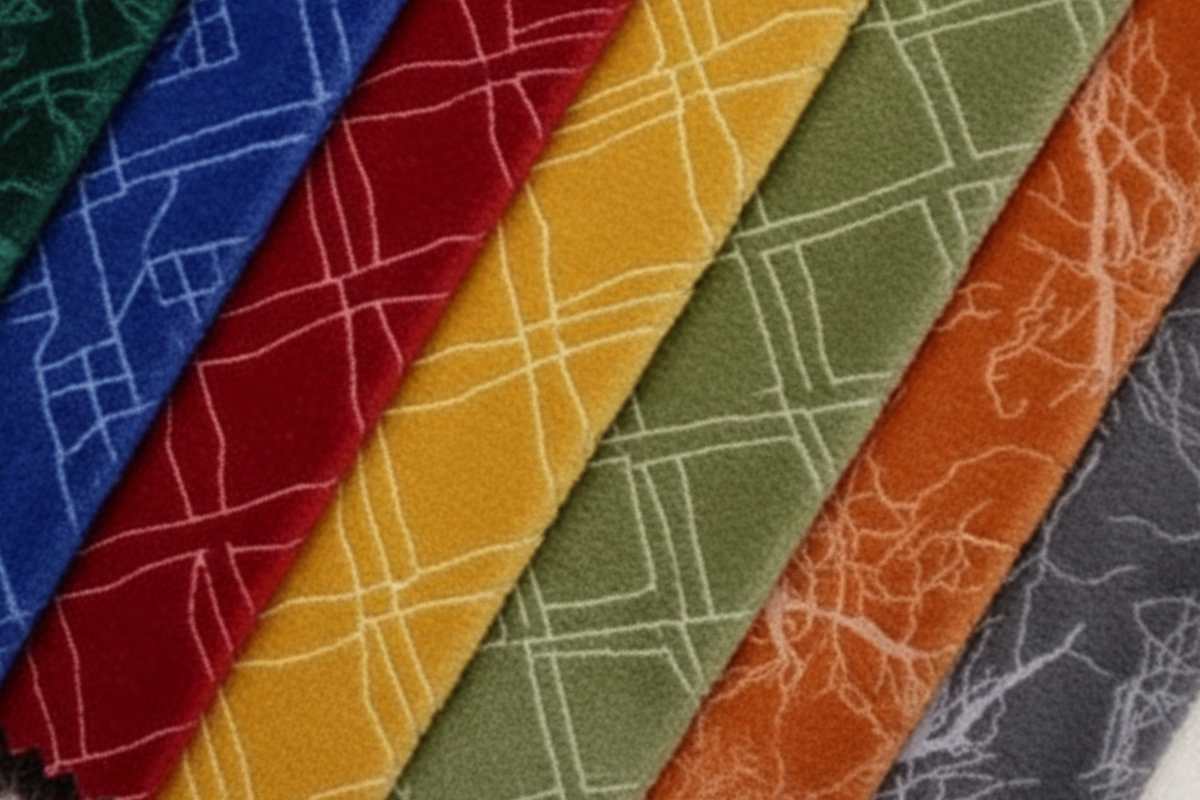
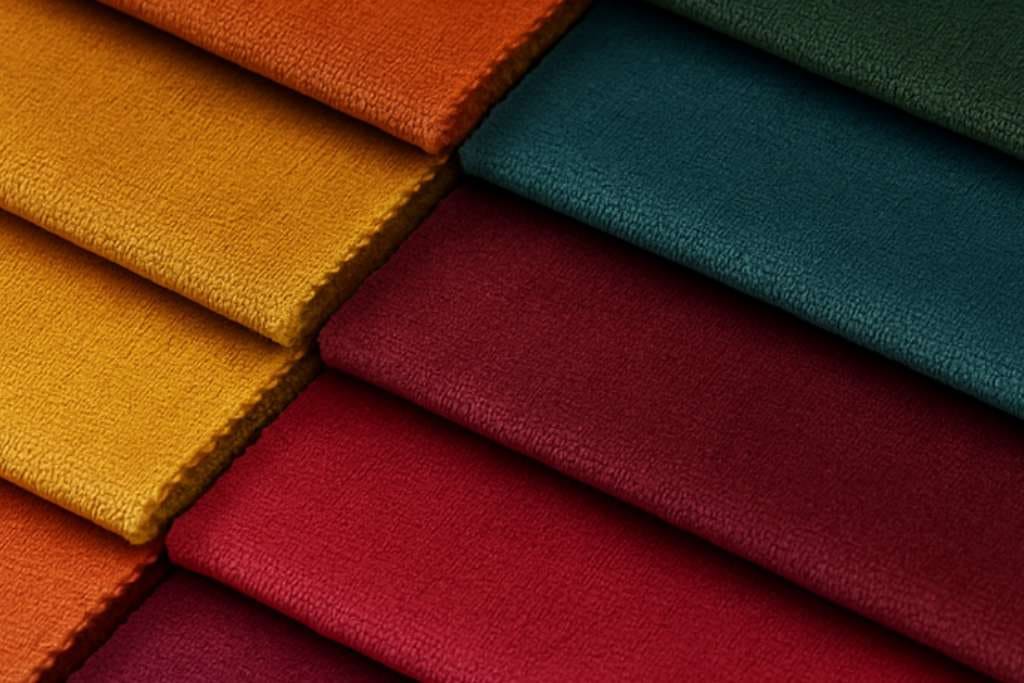
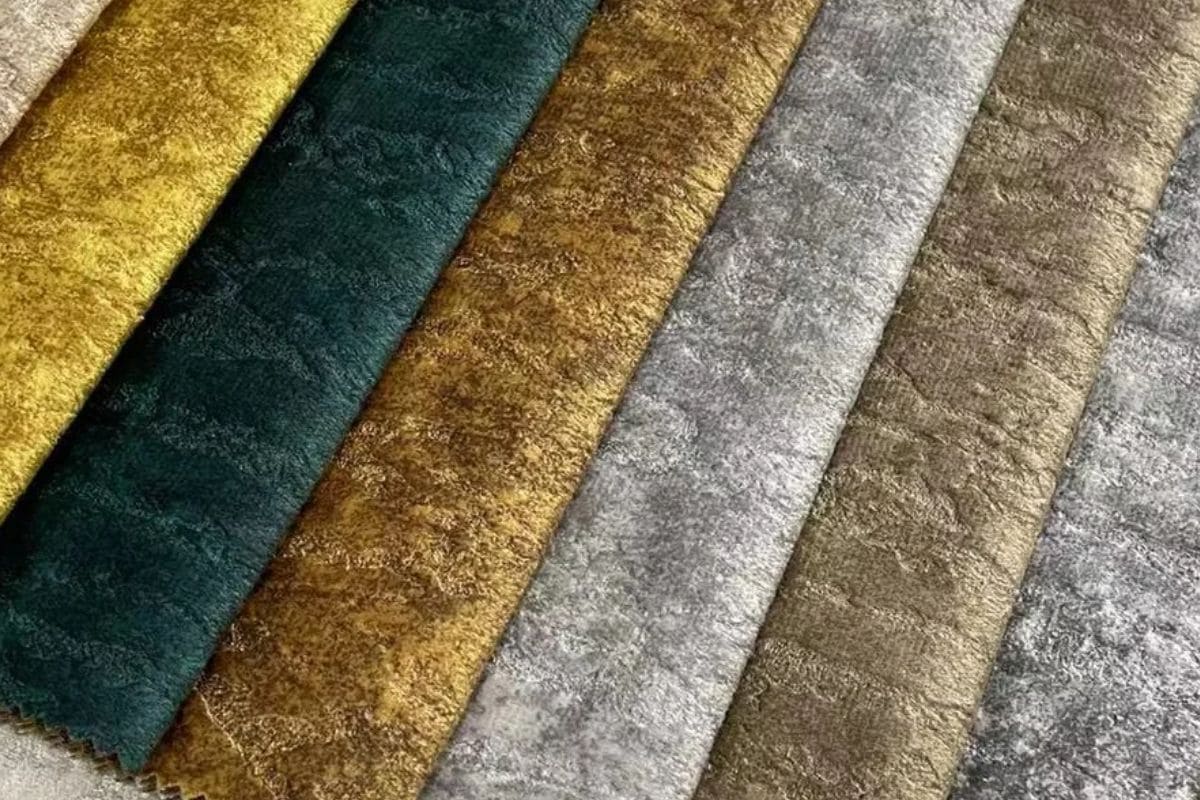
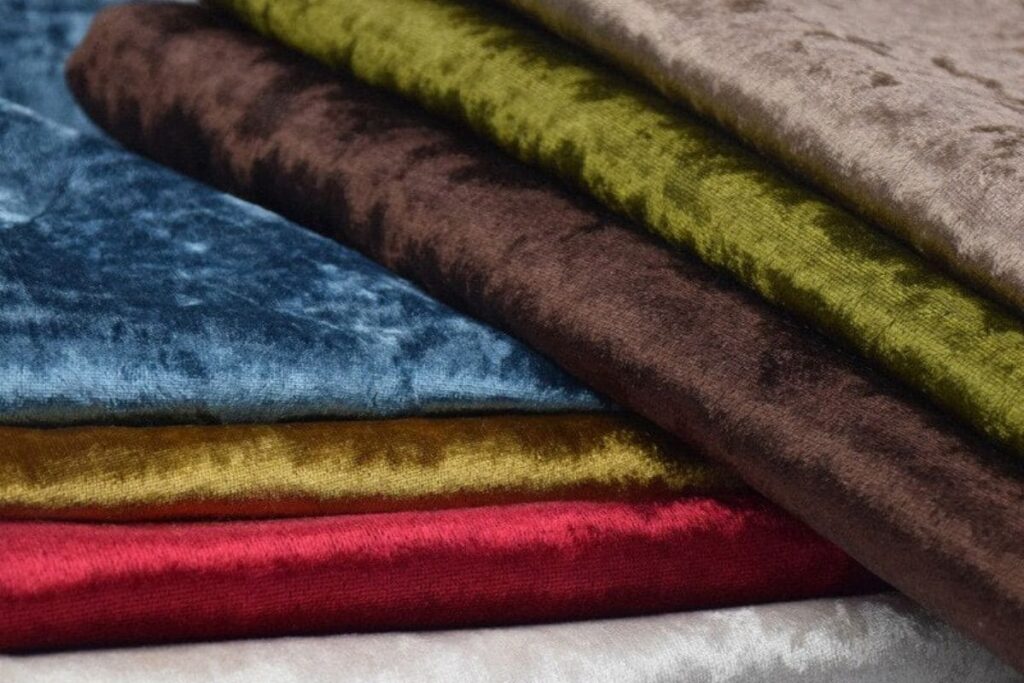
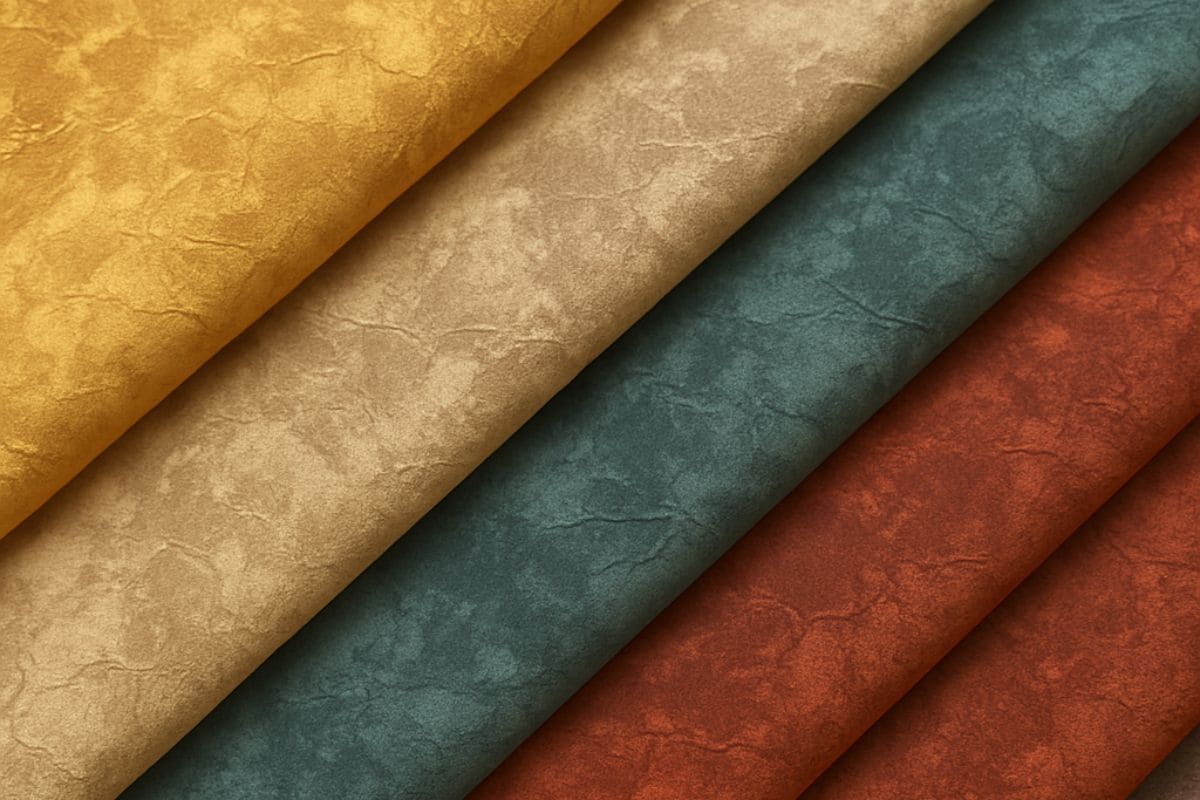
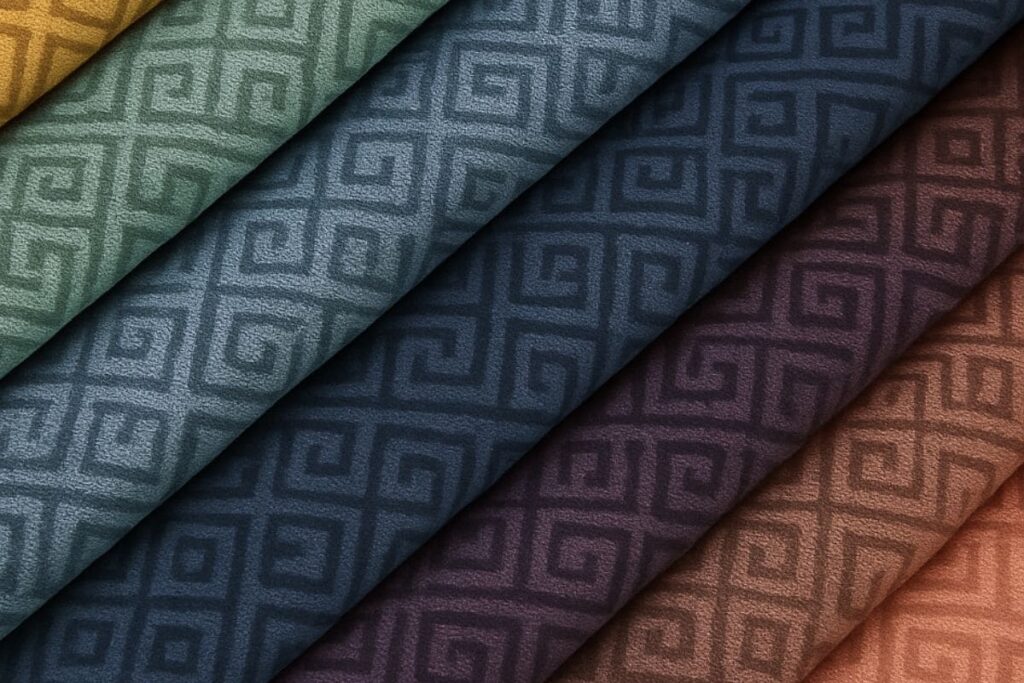
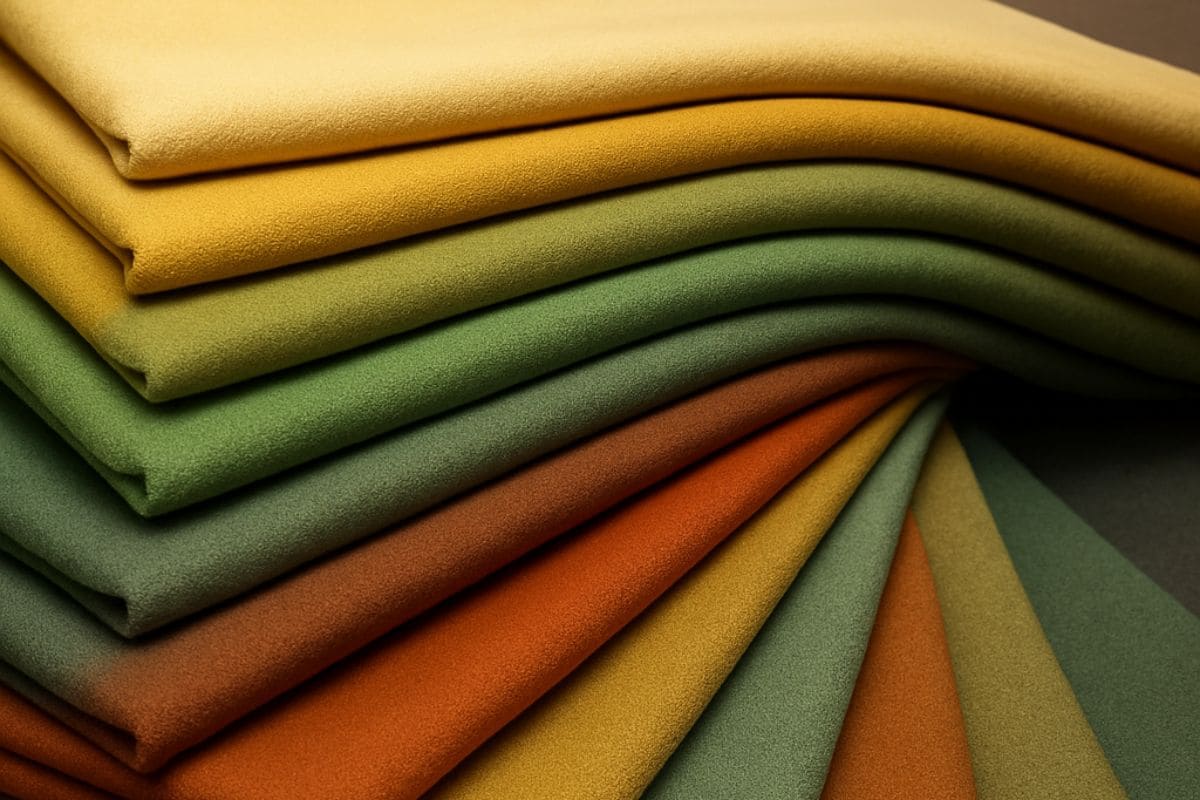
Velvet is soft and rich. But embossed velvet is even more distinctive. It has patterns pressed on the surface that make it shine and stand out. This fabric feels smooth, looks beautiful, and is a favorite for furniture and fashion.
What is Embossed Velvet?
Embossed velvet is a velvet fabric that has been embossed or flat patterns created by heat and pressure. It looks soft and shiny at the same time.
You might see flowers, waves, or abstract shapes on it. It is used in sofas, curtains, and fancy clothing.
How is it Made?
Velvet is woven using fibers like cotton, silk, or polyester.
The soft pile is made during weaving.
A heated metal roller carrying the design is pressed onto the velvet.
The pattern remains on the surface and creates a 3D effect.
Types of Embossed Velvet
Type
What It Is
Best Use
Polyester Velvet
Soft, strong, easy to clean
Sofa, chair covers
Cotton Velvet
Natural and smooth
Curtains, clothes
Silk Velvet
Very shiny and rich
Evening wear
Crushed Velvet
Has a wrinkled shine
Cushions, fashion
Upholstery Velvet
Thick and long-lasting
Furniture
Main Features
very soft and smooth
Looks luxurious and rich
Durable and long-lasting
Comes in many designs and colors
Easy to clean (especially polyester types)
Common Uses
Sofas and chairs: Add a royal touch to your room.
Curtains: Block sunlight and let in heat.
Cushion: Soft and stylish looking.
Fabrics: Great for jackets and dresses.
Decor: Used in bedding, wall panels and more.
How to Care for It
Use a soft brush or vacuum cleaner to remove dust.
Clean small stains with mild soap.
Keep out of direct sunlight to prevent fading.
Do not iron — use steam if needed.
For silk velvet, use professional cleaning.
Conclusion
Embossed velvet is a perfect blend of elegance, comfort, and class. It’s soft to the touch and gives a luxurious feel wherever you wear it—at home or in clothing. If you want a fabric that looks regal and feels comfortable, embossed velvet is the perfect choice.
FAQs – Embossed Velvet Fabric
1. Can I use embossed velvet every day?
Yes. It is strong and suitable for daily use on sofas and chairs.
2. Is it washable at home?
You can clean small stains at home, but dry cleaning is safer.
3. Does it fade with time?
No, if you keep it out of sunlight.
4. Is it expensive?
It depends. Polyester is cheap; Silk is expensive.
5. What makes it special?
Its soft touch and shiny embossed design make it stand out.
Cleaning velvet can be a pain due to its soft texture, especially if you’re working with velvet curtains or upholstery. If you’ve ever questioned if machine washing velvet is safe, this guide will provide you with best practice cleaning tips while keeping the fabric intact.
Understanding Velvet Fabric
Velvet fabric is made from two woven pieces of fabric, which are cut to produce a fine sheath, giving it its characteristic sheen and plush texture. These will include silk velvet, synthetic velvet, and cotton velvet. It is advisable always to read the label on the fabric to know the best cleaning remedy for it.
Tips To Clean Velvet
To get rid of dust and loose particles, vacuum first using a brush attachment.
Ensure to spot test any cleaning solution on a hidden area
Make Sure to use a gentle touch as to avoid crushing the fibers.
When dealing with stains do not rub velvet vigorously, blot gently instead.
Avoid direct heat, and air dry naturally.
How to Clean Velvet Curtains
This is a short guide on how to meticulously clean velvet fabrics:
A steamer can be used to refresh the curtain’s fabric and remove any wrinkles.
Use the soft brush attachment on the vacuum to clean the curtains.
Stains can be dealt with by using a teaspoon of mild dish soap diluted with warm water. Remember to blot.
For those that are marked as machine-washable, put them in the delicate cycle with cold water.
To prevent stretching, hang or lay flat to dry.
How to Clean Velvet Upholstery
You should take extra care with velvet furniture cleaning. Follow these simple guidelines:
With time, dust becomes inevitable. Use a vacuum cleaner routinely to keep it at bay.
Spills should be acted upon in real-time. Grab a cloth and absorb the liquid immediately.
Grab lukewarm water, and mix a dash of gentle detergent with it.
Soak the cloth with the solution, and wipe the firm surface with dabbing motions.
To facilitate and maintain an even drying effect, a hair dryer can be used. Maintaining the direction of lint is crucial.
Can You Machine Wash Velvet?
It depends on the type of velvet. Here’s a breakdown:
Velvet Type
Machine Wash Safe?
Notes
Cotton Velvet
Sometimes
Use cold water & gentle cycle
Synthetic Velvet
Usually
Check care label, use laundry bag
Silk Velvet
No
Must be dry cleaned
Crushed Velvet
Often
Still needs cold, gentle washing
Always check the manufacturer’s label before washing velvet in a machine.
Frequently Asked Questions (FAQs)
1. How often should I clean velvet curtains?
Cleaning them every 3 to 6 months is ideal, but more frequent cleaning may be necessary if there are smoke residues or dust particles in the air.
2. What’s the safest way to clean velvet upholstery at home?
Vacuum the area regularly, while spot-cleaning the dirt with mild soap and water, taking care not to soak the material.
3. Can I use steam cleaner on velvet?
Steam can be applied, however, it should be kept at a distance, and should be placed on low settings to minimize the risk of damaging the pile.
4. What should I avoid when cleaning velvet?
Bleach-based cleansers, hot water, or harsh scrubbing should be avoided.
5. How do I restore crushed velvet pile?
To lift the pile gently, use a clothing steamer or soft brush.
A luxurious fabric with a soft texture and shimmering surface is known as crushed velvet. The fabric is press twisted or pressed while wet which creates the unique depths and patterns in the fabric.
History and Origin
Velvet is known to have been used during the middle ages and was associated with royalty. Crushed velvet is a newer innovation and was very popular during the 1990s. Recently it has made a strong comeback in both interior design and fashion.
Manufacturing Process
Also known as crushed velvet, it is made using synthetic or natural fibers like silk, polyester or rayon. The process consists of:
This creates the distinct crushed texture as well as irregular patterns.
Weaving the fabric with a dense pile.
Untwisting or pressing it while damp.
Types of Crushed Velvet Fabric
Type
Characteristics
Common Uses
Polyester Crushed Velvet
Durable, affordable, easy to dye
Upholstery, clothing
Silk Crushed Velvet
Luxurious, soft, expensive
High-end fashion, evening wear
Rayon Crushed Velvet
Lightweight, soft drape
Drapes, scarves, blouses
Blended Fabrics
Combines qualities of multiple fibers
Multipurpose, cost-effective
Uses of Crushed Velvet Fabric
Apparel: Dresses, jackets, evening gowns
Home Decor: Curtain sets, cushion covers, upholstered sofas
Craft Projects: Event accessories, backdrops
Upholstery: Chairs, headboards, ottomans
Crushed Velvet vs. Crush Velvet
While both terms are used interchangeably, “crushed velvet” is the more accurate and widely accepted term. Referring to the same material, “crush velvet” is most likely a colloquial or simplified spelling.
Why Crushed Velvet is Popular in India
Textiles are produced globally, and India has embraced crushed velvet fabric for Indian traditional and modern designs. The fabric’s:
Increased production capacity due to expansion in foreign fashion trade has increased garment exports.
Rich texture adds to ethnic Indian outfits like lehengas and sherwanis.
Availability in various colors makes it suitable for festivals and weddings.
Buying Guide: What to Consider
When considering the purchase of crushed velvet fabric, it is advisable to:
Ensure you validate the fabric’s composition ([[ polyester, silk, etc. ]).
Consider the texture because softness and weight are important.
Search for uniform crushing pattern.
If buying in bulk, purchase from reliable Indian exporters.
Consider the intended use such as apparel or home decor when selecting the fabric.
Top Crushed Velvet Fabric Trends in 2025
Earthy tones and jewel tones are still trending.
Designers are integrating sheer fabric into crushed velvet.
There is an increase in eco friendly crushed velvet.
Higher adoption rate for luxury interior furnishings in India and abroad.
Conclusion
As seen, crushed velvet fabric is increasingly becoming the go-to material to use because of its versatility, style, and unique characteristics. Despite being sought after textile, it’s still one of the most popular materials used in fashion design and home décor.
Frequently Asked Questions (FAQs)
1. What are the raw materials used to make crushed velvet fabric?
Most times, crushed velvet fabric is made with a blend of polyester, rayon or silk, and achieves its distinct weave by twisting the damp fabric.
2. How does crushed velvet differ from regular velvet?
The main difference is that the surface of regular velvet has an even smooth pile while the surface of crushed velvet is textured and shiny due to the fabric being pressed or twisted.
3. Can crushed velvet be used for upholstery?
Definitely, it can be used for upholstered fabric especially the polyester or blended crushed velvet because it is cheaper and more durable for use on sofas, chairs, and cushions.
4. Is crushed velvet suitable for Indian traditional attire?
Definitely! The rich texture combined with vibrant colors make crushed velvet popular for lehengas, blouses, and sherwanis in India.
5. What maintenance do I perform on crushed velvet fabric?
With most crushed velvet, it is preferable to hand wash or dry clean. Always consult the care label for specific guidelines.
Unlike other textiles, velvet has always tasted of nobility. When combined with entwined printed patterns, it becomes even richer. No matter whether you deal with fashion, interior design, or crafting fringes, knowing the details of printed velvet fabric can help you achieve a lot.
What is Printed Velvet Fabric?
Explanation of printed velvet fabric is relatively simple. It is a type of velvet that has gone through the additional step of printing so that stripes, dots, colors, or artistic designs can be done on its surface. Intensity of both, the texture of velvet and intricately crafted designs multiplies, thus printed velvet is one of the choice fabrics for fashionwear, upholstery and home décor.
Velvet printing can be done on different base fabrics such as:
Silk velvet
Polyester velvet
Cotton velvet
Types of Velvet Printing Techniques
There are several methods used to create velvet prints, each with unique results:
Technique
Description
Screen Printing
Traditional method using mesh stencils. Ideal for bold and repeat patterns.
Digital Printing
High-resolution printing for complex and multi-color designs. Best for custom work.
Burnout Printing (Devoré)
A chemical process that partially dissolves the velvet pile to create semi-transparent patterns.
Sublimation
Works best on polyester velvet. Infuses ink directly into the fibers.
Applications of Printed Velvet
Because of its aesthetic appeal and uniquely soft texture, printed velvet fabric finds application in diverse areas including:
Fashion: Designed Evening Gowns, Designer Scarves, and Jackets.
Home Decoration: Velvety Upholstered Sofas, Curtains, and Cushion Covers.
Occasion Decoration: Table Runners, Luxurious Backdrops, and Event Decoration.
Art: Mixed Media Artworks and Decorative Panels.
Advantages of Velvet Printed Fabric
Here’s why printed velvet stands out:
Textural Richness & Visual Height: Enhances warmth and adds charm to any given item.
Customization: Ideal for limited addition luxuries by brand designers.
Long Lasting: Printed fabrics maintain texture, especially those made from synthetic blends like polyester velvet.
Distinctive Charming: The markings on each piece of velvet printing reveals print story.
Where to Buy High-Quality Velvet Prints
In the case that you are looking for printed velvet fabrics, you can try sourcing from:
Fabric Shops: Popular fabric shops frequently have ready stock of exclusive designer prints.
Online Stores: Etsy, Alibaba, and other stores that specialize in textiles.
Industrial Suppliers: Best for bulk purchases and custom orders.
When sourcing from suppliers, you want to try looking for:
Clarity of print.
Weight of the fabric, usually measured in GSM.
Reviews provided by previous clientele.
Availability of samples.
Conclusion
The combination of rich texture and eye-catching design on printed velvet fabric makes it suitable for use in fashion, upholstery, and home decor. Its appeal is luxurious and versatile; thus it suits modern styles and classic designs. Velvet fabric printed either for clothing as well as for interiors serves to enhance the aesthetics and sophistication of any project.
Frequently Asked Questions (FAQs)
1. What is the most effective method to print on velvet fabric?
The finest detail and color accuracy is achieved with digital printing, particularly on polyester velvet.
2. Can printed designs on velvet fabric fade over time?
As long as fabrics are cared for correctly, modern prints—especially sublimated prints—are resistant to fading.
3. Can printed velvet fabric be used for upholstery?
Yes, with added backing, heavy grades above 300 GSM are ideal.
4. What is the best way to clean printed velvet fabric?
Dry cleaning is the gentlest method. For light blemishes, pat the area with a wet cloth without rubbing.
5. Is there any possibility for custom velvet printing?
Yes! Many vendors provide custom velvet printing for order quantities as low as 10 to 20 yards.
Known for its smooth luxurious feel and sheen, velvet is a fabric with a soft luxurious feel and a characteristic short pile that gives is a rich texture and sheen. While silk traditionally made velvet, today manufacturers use cotton, polyester, rayon, and blends, making it more affordable without losing its beauty.
History of Velvet Fabric.
used Ancient Eastern cultures velvet is now woven fabrics. Velvet’s history is tied to Middle Eastern cultures. Velvet was very popular in Europe during the Renaissance period (1400 – 1600). Velvet was considered a symbol of wealth during this period. With modern technology in textile production, velvet shifted from being an elite fabric into a much more affordable luxury.
How is Velvet Made?
To produce velvet, manufacturers use a double cloth loom that weaves two layers at the same time. They then cut these layers to create the pile surface, giving velvet its soft and plush feel. Depending on the fiber used, be it silk, cotton, or synthetic, the process will change.
Types of Velvet Cloth
Type
Description
Best Used For
Plain Velvet
Smooth and uniform surface
Apparel, curtains
Crushed Velvet
Wrinkled texture, reflects light unevenly
Partywear, upholstery
Panne Velvet
Flattened in one direction for extra shine
Fashion accessories
Embossed Velvet
Patterns pressed into the fabric
Home décor, high-end fashion
Stretch Velvet
Contains spandex for flexibility
Dancewear, leggings
Chiffon Velvet
Lightweight and semi-sheer
Evening gowns, overlays
Ciselé Velvet
Cut and uncut pile design
Drapes, decorative fabrics
Polyester Velvet
Synthetic version with enhanced durability
Sofa sets, curtains, fashion clothing
Key Properties of Velvet Material
Lustrous Finish: Has light reflection which gives it a shimmer.
Soft Texture: Smooth and warm pile is dense.
Thermal Insulation: Excellent for winter clothing and upholstery.
Color Depth: Surface dyes give vibrant hues a rich depth.
Drapability: Falls beautifully on a variety of clothing as well as curtain fabrics.
Uses of Velvet Fabric
Due to its appealing fragrances, velvet is famous for:
Fashion: Evening gowns, jackets, and sherwanis, blouses, lehengas.
Upholstery: Sofas, armchairs, cushions, and ottomans.
Curtains & Drapes: Adds sophistication and blocks bright rays.
Accessories: Elegant shoe, belt, and handbag, and even jewelry boxes.
Event Decor: Stages, backdrops, and table runners bring opulence to weddings.
Advantages and Disadvantages
Pros:
Affluent intricate look
Firm and yielding
Protective and cozy
Multitude of vibrant shades
Luxurious to touch and rich to experience
Cons:
Bears the marks of crushed piles and other pressure marks easily
Can incur higher costs, most silk based material being quite expensive
Velvet is delicate, so handle it carefully and store it precisely.
Attracts lint and hair from pets quite easily
Velvet Fabric Trends in India
India plays an important role in the production and distribution of velvet textiles, especially in the context of bridal couture, ethnic dresses, and interior decorations. Major commercial and distribution centers include Surat, Mumbai, and Delhi. Velvet is particularly popular during the wedding and festival seasons, especially in Rajasthan, Punjab, and Gujarat.
Most Velvet Color Tones In India:
Royal blue
Maroon
Emerald green
Deep purple
Gold and bronze shades
Velvet Care and Maintenance
Cleaning Method
Recommendation
Dry Cleaning
Best for silk and rayon velvet
Spot Cleaning
Blot gently with a damp cloth
Vacuuming
Use a soft brush attachment
Steaming
Helps restore the pile and remove wrinkles
Avoid ironing directly on velvet. Store it hanging or folded inside out to avoid pile damage.
The luxury and multifunctional attributes of velvet make it a popular choice in the fashion and home décor industries. While it may require some form of upkeep, it is indeed worth the effort due to its stunning appearance and gentle feel to the fabric.
Frequently Asked Questions (FAQs)
1. What is velvet cloth used for?
Due to its rich and soft appearance, velvet cloth is in high demand in the clothing industry, furniture, curtains, and other high-end accessories.
2. Is velvet fabric good for summer?
Velvet is most appropriate for colder regions because it retains heat. However, lightweight velvets like chiffon velvet can be incorporated into summer clothing.
3. What is velvet made of?
Silk, cotton, polyester, rayon or a blend can all be used to make velvet. The most costly is silk velvet while the more economical and tough is polyester velvet.
4. how do i clean velvet fabric at home?
You may machine wash synthetic velvet on a gentle cycle. Natural velvet, however, must be dry cleaned.
5. Does velvet fade in sunlight?
Indeed, particularly silk and cotton velvet. Do not expose velvet items to direct sunlight since it fades.
6. Is polyester velvet strong?
Yes. Polyester velvet is strong, rip resistant, and easy to care for, making it perfect for daily use upholstery.
7. What are the disadvantages of velvet?
Expensive, difficult to clean, prone to crushing, and if it’s high-quality velvet, brutally costly.
8. Can initially ironing be done to velvet?
Steaming is the only approved method. You can also cover a piece of the cloth and set an iron to the lowest temperature.
9. Why is velvet regarded as luxurious?
The honest truth is that its lavish structure, wash and dry shine, and a Barbara heart in enslaved nobles always makes out velvet resemble luxury.
10. Where is velvet fabric manufactured in India?
Bridal and ornamental textiles are the main offerings from the velvet industry in Surat, Varanasi, and Mumbai.